Welsh 3000s Route Guide

An established hiking route that takes you through the heart of Eryri National Park (Snowdonia) and includes all of its major peaks, the Welsh 3000s is quickly becoming one of the most celebrated walks in Wales. Popular amongst hikers who want to take on a considerable physical challenge while surrounding themselves with some of the UK’s most striking mountain landscapes, it is also a fantastic alternative to the Three Peaks Challenge for those who don’t want to spend long periods on the motorway or who are concerned about sustainability.
In this in-depth route guide, we provide stage-by-stage instructions for completing the route and discuss the various route permutations. While we always recommend hikers equip themselves with adequate navigational tools when out in the mountains, this guide is a valuable resource for those looking for additional route information and descriptions.
What are the Welsh 3000s?
The Welsh 3000s is an iconic hiking adventure in which participants attempt to summit the 15 peaks in Eryri National Park that top out over 3,000 feet (914 metres). The traditional route is approximately 50 kilometres long and encompasses around 4,200 metres of elevation gain. It features breathtaking scenery, epic, knife-edge scrambles, steep slopes and plenty of glorious trails.
Many passionate hikers will have heard of the Welsh 3000s Challenge. It involves completing the route – which technically begins at the first summit and ends at the final one – within 24 hours. However, an increasing number of people choose to tackle the Welsh 3000s over a series of days, usually two or three. Not only is this a more realistic challenge for most people (it is still by no means an easy feat), but it also enables you to enjoy the experience. Rather than a relentless race against the clock, a three-day hike gives you more time to appreciate your spectacular surroundings and savour your time in the mountains.
That’s not to say there isn’t a place for timed challenges that push experienced hikers to their limits or that the 24-hour Welsh 3000s isn’t a remarkable achievement. However, we strongly believe that most people will enjoy, appreciate and get more from tackling the 15 peaks over several days.
What peaks are included in the Welsh 3000s?
Eryri is home to 15 peaks with summits over 3,000 feet. And they are all included on the Welsh 3000s route. Usually, we divide them into three main ranges or massifs. These are the Yr Wyddfa (Snowdon) massif, the Glyders and the Carneddau. As always, different people arrange and order the mountains in different ways. For instance, Tryfan is not always considered a part of the Glyders but is usually grouped with them. Some hikers also discount Carnedd Gwenllian, as they view it as a minor sub-summit. We opted to go with the majority and utilise the most widely accepted definition of the Welsh 3000s. As such, the list of mountains is as follows:
Yr Wyddfa Massif
1. Snowdon
2. Garnedd Ugain
3. Crib Goch
The Glyders
4. Elidir Fawr
5. Y Garn
6. Glyder Fawr
7. Glyder Fach
8. Tryfan
The Carneddau
9. Pen Yr Ole Wen
10. Carnedd Dafydd
11. Carnedd Llewelyn
12. Yr Elen
13. Foel Grach
14. Carnedd Gwenllian
15. Foel-fras
Which way should you tackle the route?
It is possible to attempt the Welsh 3000s as both a south-to-north and north-to-south route. However, most hikers prefer the former as it means you tackle the tougher Yr Wyddfa summits first and end with the Carneddau mountains, which are usually considered the easiest. This makes a lot of sense, as the difficulty decreases as your legs tire. The “official” route used for the Welsh 3000s record runs from Yr Wyddfa in the south to Foel-Fras in the north. The record currently stands at 4 hours, 10 minutes and 48 seconds.
Direction of travel isn’t the only route variable. If you choose the south-to-north route, you can also begin your hike on either Yr Wyddfa or Crib Goch. Whether you are going for the 24-hour challenge or a three-day hike will influence your decision. If competing on the “official” route, you need to start on Yr Wyddfa. If you are just trying to complete the challenge within 24 hours, it also makes sense to start with Yr Wyddfa, as this means you avoid starting on Crib Goch and tackling the potentially dangerous ridgeline in the dark. However, if you have more time, bagging Crib Goch first is an excellent idea.
The Route
As you can see, there are several Welsh 3000s route variations to consider. Our own three-day Welsh 3000s challenge actually begins with Crib Goch. However, we can’t cover every variation in detail (though you can find the itinerary for the RAW Adventures event on our Welsh 3000s page), so we have opted to explain the Yr Wyddfa to Foel-fras version. We have also divided the hike into ten stages for ease of reference.
1. Up to Yr Wyddfa
On the Welsh 3000s, the climbing begins well before the challenge, as you technically start the route from the first summit. That means hiking up to the summit of Yr Wyddfa, 1,085 metres above sea level, to start the challenge in earnest. Most participants usually take the Pyg or Miners’ tracks, as these are considered two relatively quick and “easy” climbs (compared to the alternatives).
2. Yr Wyddfa to Garnedd Ugain
Tradition dictates that the official record route begins when you touch the trig point on the summit of Yr Wyddfa. From there, you head northwest and follow the track by the railway to the point where the Pyg meets the ridgeline. An established path heading northeast will take you to the trig point atop Garnedd Ugain. Two down already!
3. Garnedd Ugain to Blaen-y-nant
Next comes arguably the most tricky and treacherous part of the entire route – the Crib Goch scramble. Renowned as one of the UK’s most beloved mountain scrambles, it requires a cool head, confidence and experience traversing exposed ridgelines. From the Garnedd Ugain trig point, you descend east, scrambling across the ridge toward the Crib Goch Pinnacles. You can climb over or just to the right of the first pinnacle and to the left of the second. A few hundred metres further, you will reach a pile of stones marking the Crib Goch summit. The ridgeline scramble continues a little further, curving around to the north.
As the ridge comes to an end, keep an eye out for a rough path that descends in a north-westerly direction. This steep downhill section will drop you into a gully, from which you follow a path that initially heads west before gradually assuming a more northerly bearing. In doing so, you will cross a stream and then pick up a path next to the stream leading to Blaen-y-nant. This section can be extremely difficult to navigate if you are unsure of the route and is one of the reasons people choose to recce the route first or attempt the Welsh 3000s with the assistance of an experienced guide.
4. Blaen-y-nant to Y Garn
After the heady heights of Crib Goch, things get a bit more simple. Follow the road from Blaen-y-nant to Nant Peris and turn right at the chapel towards Ty Isaf campsite. Pass the campsite following the public footpath, and you will eventually reach a metal gate on your right. Go through the gate and ascend northwards until you come across a footbridge. Cross the bridge and continue towards the top of Elidir Fawr, where you will find a cairn and rudimentary stone shelter. Head in a north-easterly direction along the path. It will eventually curve towards the south and then split. Take the path on the right up to Y Garn.
5. Y Garn to Glyder Fach
Standing atop Y Garn, orientate yourself and follow your compass south-east to a lake, known locally as Llyn y Cwn. Follow the left-hand side of the lake and climb the scree up to Glyder Fawr. On reaching the plateau above, look to the left of the path for the highest rock feature. This is Glyder Fawr.
To the east, you should be able to see the sharp rock formations of Castell y Gwynt. It is your next destination. Reaching the rocks, you can either scramble over them or pass around their right-hand edge. Ahead, a series of boulders will help you identify the summit of Glyder Fach. A quick climb up them and you have arrived.
6. Glyder Fach to Tryfan
Descend back down the boulders, head past the Cantilever (a stone slab that resembles a see-saw) and head northeast along a steep descent with loose rock underfoot. Cross the ladder stile and make your way toward Bwlch Tryfan. This will involve some scrambling and you want to go around the left of the south peak until you can see the famous Adam and Eve stones on the summit of Tryfan.
7. Tryfan to Pen yr Ole Wen
Head north from the summit and down to the col beneath. From there, a path leads westwards and steeply down into a gully. Find the stone steps heading northwest and follow them onto a path that meets the A5. Continue westwards beside the road to Ogwen Cottage. Just after Ogwen, you will cross a bridge. On your right will be a gap stile. Walk up to the stone steps, along the path and toward the plateau above. A stone shelter marks the Pen yr Ole Wen summit to the north-east.
8. Pen yr Ole Wen to Yr Elen
Depart Pen yr Ole Wen to the northwest and join the ridge that runs to your next summit, Carnedd Dafydd. Continue along the ridge until you reach the slopes rising up to Carnedd Llewelyn. Ascend the path and take a less obvious path that heads left and around to the northwest. It will lead to a clearer path to Yr Elen. A small cairn indicates you have reached the summit.
9. Yr Elen to Garnedd Uchaf
Retrace your steps until you reach the path that takes you up in the direction of Carnedd Llewelyn to a plateau. There, you should see a stone shelter at the summit. A path northwards leads you to Foel Grach. It will slowly turn north-eastwards and culminate in a pile of stones on the summit of your thirteenth mountain.
A steep, north-easterly descent runs past a shelter and meets a path that heads north. A short way along this path, Garnedd Uchaf will come into view. A series of prominent rocks are the clearest indication you are heading in the right direction. While the path goes around these rocks, you need to climb over them to reach the summit.
10. Garnedd Uchaf to Foel-fras
The final stretch of your hike requires you to leave Garnedd Uchaf heading northeast. You will reach a path that takes you towards Foel-fras. To reach the trig point at the summit, you need to leave the path. On touching the trig point, you have completed this monumental challenge and achieved something truly spectacular. Congratulations!
That said, you still have to descend your final mountain. The best way of doing so is along the ridge that runs northwest. At the col, take the path to the left that works its way to the Llyn Anafon reservoir. Pick up the well-established track at the reservoir and follow it down to the car park. If you are heading to the nearest village, Abergwyngregyn is now just 3 km away.
The Welsh 3000s with RAW Adventures
At RAW Adventures, we strive to strike a balance between satisfying hikers’ desire for a physical challenge and creating an enjoyable and memorable experience. For us, hiking is an opportunity to connect with and explore incredible natural environments and make the most of Eryri’s truly special mountain landscapes. And that’s a little difficult when you are pushing yourself to the extremes in an effort to conquer all 15 of its 3,000+ feet peaks.
That’s why we decided to launch our own three-day Welsh 3000s Challenge. While still a significant achievement, tackling the Welsh 3000s over three days is more accessible, achievable and fun. It includes three nights of accommodation in Llanberis and assistance from our experienced Mountain Leaders to ensure you stay safe and on route.
If the RAW Adventures three-day adventure appeals to you, check out our Welsh 3000s challenge page and please feel free to reach out to the team if you have any further questions.
Explore More
Categories
More Guides & News
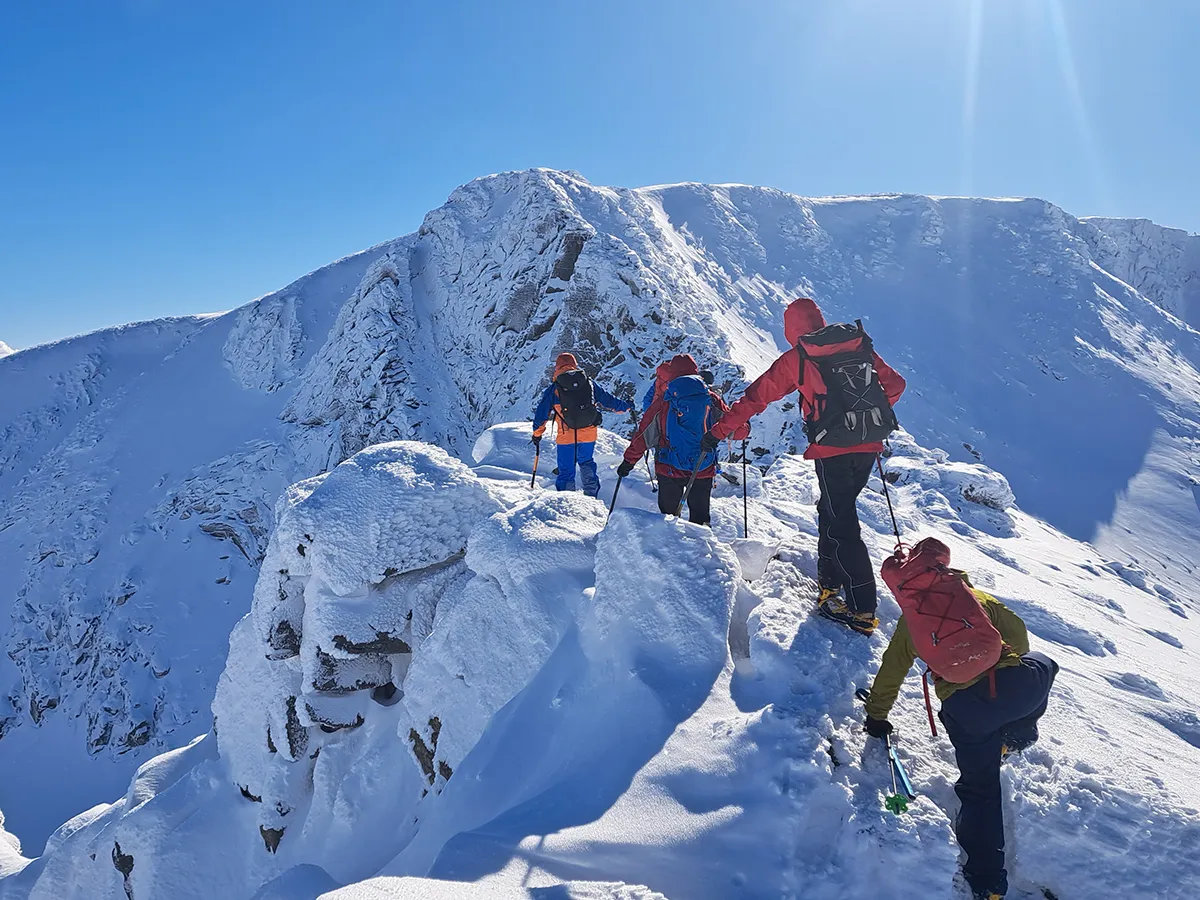
Are Winter Skills Courses Worth It?
This guide introduces the concept of a Winter Skills Course, and why and how this specific input could really help to increase knowledge and confidence for mountain walking in the winter months. Read on to find out what you can learn from attending, and how this experience can extend to year-round adventures.

Six Routes. One Unique Mountain Challenge
Designed and delivered exclusively by RAW Adventures, the Snowdon 6 Challenge invites you to explore six of the mountain’s most iconic routes – all in one incredible, fully-supported day. And now, thanks to our charity partner The Joshua Tree, you’ve got a rare opportunity to be part of something even more meaningful…

Marching Together Skyline Heroes Hike
TSSI Recruit, a global leader in telecoms, IT, and digital staffing, is stepping up with a team of recruits, ready to band together, push limits, and support veterans through HELP for HEROES. Their mission? To channel their core company values into every stride they take.
Instagram
#QuitTalkingStartDoing