Welsh 3000s – Everything You Need To Know
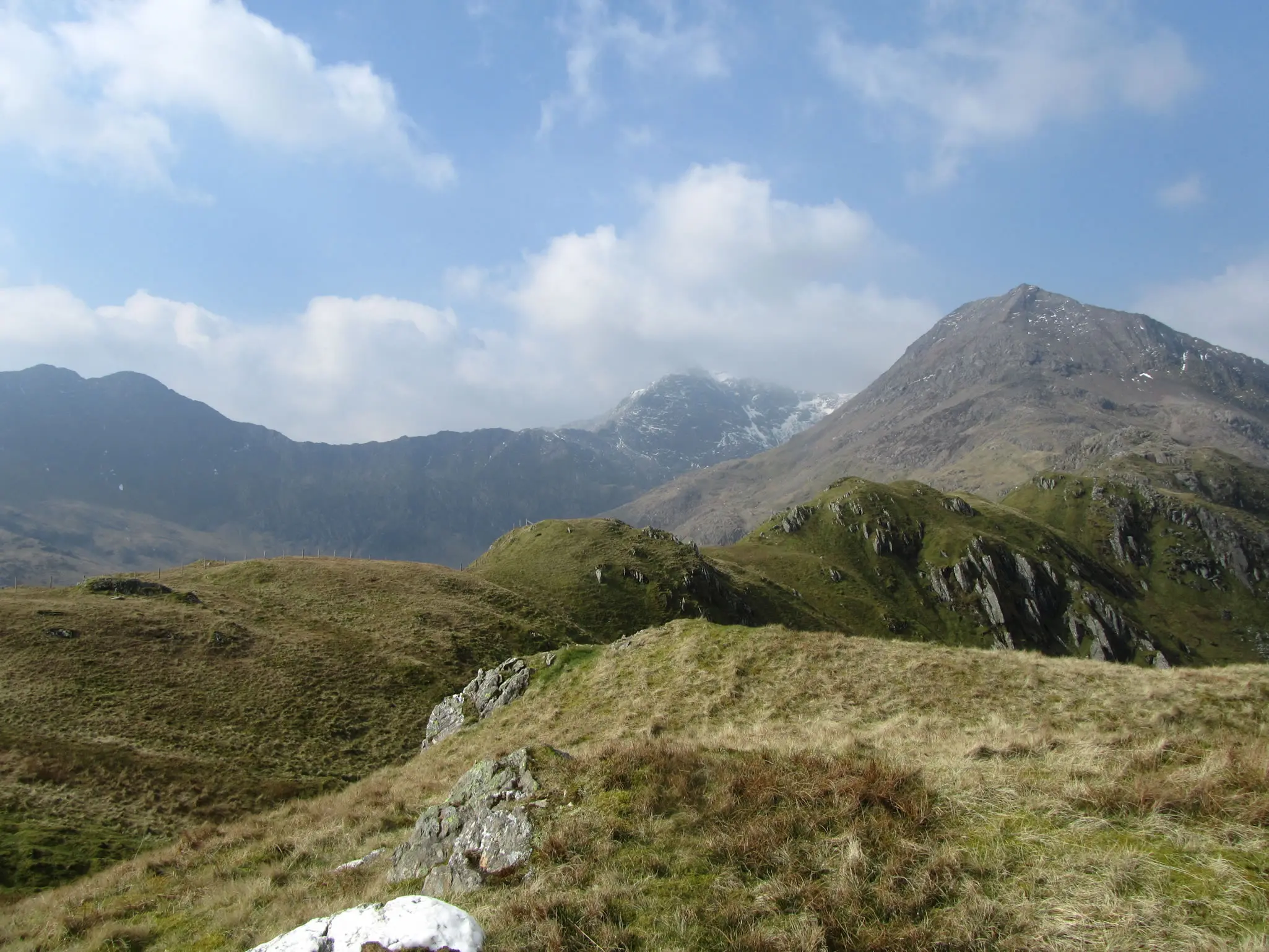
The Welsh 3000s are the 15 (some say 14, but more on that later) peaks in Wales that exceed 3000ft in height. Conveniently, they’re all located in Eryri (Snowdonia) and linked by a single, continuous, on-foot route that you can complete in a single day, depending on your fitness and ability. Sound interesting? Well, read on. In this guide to everything you need to know about the Welsh 3000s, we take a look at the famous route, examine each of the peaks you’ll scale and consider a few logistics, too.
What is the Welsh 3000s challenge?
The Welsh 3000s is one of the most iconic challenges in Wales. It ranks amongst the top mountaineering experiences in the entire UK and is beloved by those hikers and climbers who enjoy pushing themselves to the limit in some of the most spectacular and challenging landscapes in the British Isles.
While many attempt to complete the 26-mile (42km) route within 24 hours, the Welsh 3000s is not an organised or formal event, so you can take things slightly slower. Plenty of people tackle the route over a weekend or several days, allowing them to soak up the scenery and enjoy the journey a little more. If you are taking on the traditional 24-hour, timed challenge, you do not include your first ascent and final descent in the time. Instead, you start and finish on a summit.
What is your ultimate aim?
As with any outdoor challenge event, it’s a good idea to work out exactly what your aim is and what you hope to get from the experience. Are you going for a fast finish time? Do you just want to make it within the 24-hour cut-off? Are you in it for the scenery and outdoor adventuring? Your goal will impact how you plan, approach and execute the Welsh 3000s, so make sure you know what you hope to achieve.
It’s also worth mentioning that the Welsh 3000s are hard. This isn’t a challenge to take on lightly and it requires a pretty high level of fitness, particularly if you’re attempting it at speed. You’ll also need a head for heights, experience in the mountains and be comfortable scrambling across ridgelines and up rocky peaks. There are moments along the route that are tricky to traverse and the mountains are always dangerous if you’re not prepared, well-equipped or capable of crossing the terrain.
The Welsh 3000s, the 14 Peaks or the 15 Peaks?
In the past, there was some confusion over what the challenge is called. Is it the Welsh 3000s, the 14 Peaks Challenge or the 15 Peaks Challenge? The short answer is – all of them. The Welsh 3000s name has an obvious origin – it refers to all the peaks over 3,000 ft in Eryri. The 14 Peaks Challenge comes from the fact that Carnedd Gwenllian was originally left off the list, while the new 15 Peaks Challenge reflects the fact that this peak is over 3,000 ft and is now officially included.
A breakdown of each section
Before we take a more in-depth look at the individual summits, there are a few things to know about the Welsh 3000s. First, you can complete the route in either direction – from south to north or north to south. The former is slightly more popular than the latter. Going north to south means you slowly increase the difficulty. Whether that’s a good or bad thing is a matter of personal preference.
Second, the route can be broken into three main sections. These are the Snowdon Peaks, the Glyders and the Carneddau group. As each section encompasses a different mountain range, the terrain they feature and the challenges they pose vary considerably. Whereas the Carneddau are defined by long, relatively easy and grassy climbs, the Glyders are marked by granite faces, rocky ascents and more technical climbing. This makes them much more tiring to cross. Finally, the Snowdon peaks are the highest of the lot and include a phenomenal scramble along one of the UK’s most striking ridgelines.
A closer look at the peaks themselves…
As most people tackle the route from south to north, that’s the order in which we’ve listed the mountains. However, we’ve tried to ensure that all the information provided below applies to participants heading in either direction.
Snowdon Peaks
1) Yr Wyddfa (Snowdon) – The most famous and the tallest of the Welsh mountains, climbing Yr Wyddfa on its own is challenging enough. At 3,559 ft high, Yr Wyddfa is either the first or the last peak you take on and a thrilling way to start or end the Welsh 3000s.
2) Garnedd Ugain – At 3,494 ft tall, Garnedd Ugain is a bit of a strange one. Though crowned with a trig point, it’s not particularly recognisable as a summit. Many hikers barely register it as they pass, mainly because the imposing peak of Yr Wyddfa and the hands-on scramble across Crib Goch sit either side.
3) Crib Goch – Almost as iconic as the summit of Yr Wyddfa itself, Crib Goch is a Grade One scramble that is often complicated by high winds and low visibility. If you’re starting the route early in the morning atop Yr Wyddfa, there’s a good chance you’ll take this on in low light conditions, too. Crib Goch reaches 3,028 ft.
The Glyders
4) Elidir Fawr – Though Yr Wyddfa is a fair bit taller, many participants find climbing the Glyders more difficult. At 3,031 ft, Elidir Fawr is often under-appreciated. In reality, it’s one of the toughest climbs on the route. A long, difficult slog, you’ll feel it in your legs when you reach the top of this one.
5) Y Garn – Y Garn measures 3,106 ft tall and is fairly gentle compared to the Elidir Fawr and the more rugged crags surrounding it. There are some fantastic views of the local area and Devil’s Kitchen below, so take a moment to appreciate the spectacular setting.
6) Glyder Fawr – Climbing or descending (depending on which way you’re going) Glyder Fawr involves traversing a scree slope that’s tough going for weary legs. However, reach the top of the 3,284 ft summit and you are rewarded with breathtaking views over Yr Wyddfa.
7) Glyder Fach – One of the twin peaks that define this range, Glyder Fach is 3,261 ft tall and far rockier than many of the other peaks in the challenge. Moving from Fach to Fawr or vice versa can be tricky in low visibility, as the path tends to disappear and isn’t always easy to follow.
8) Tryfan – Tryfan is a scrambler’s dream peak. Measuring 3,011 ft, it is rocky, challenging and a whole lot of fun if you have a head for heights. Two large rocks mark the summit – they are known as Adam and Eve to local hikers and Eryri experts.
The Carneddau
9) Pen Yr Ole Wen – A relatively relaxed way to kick-off (or end) the Carneddau section of the Welsh 3000s, Pen Yr Ole Wen hits 3,208 ft. It’s never too tough a climb but the path isn’t always obvious and care needs to be taken to ensure you’re heading the right way. The path tends to get easier to follow as you gain elevation.
10) Carnedd Dafydd – Named after Llewellyn the Great’s brother, Carnedd Dafydd is the highest mountain in the Carneddau range, clocking in at 3,425 ft. It’s also where you’ll find the Black Ladders – a spectacularly steep scrambling section that ice climbers love come the wintertime.
11) Yr Elen – At first sight, Yr Elen looks like it is a little out of the way. That’s because it is. Unlike many other summits on this list which link up fairly naturally, it requires a bit of a detour to get to this gorgeous 3,156 ft peak.
12) Carnedd Llewellyn – Said to be named after Llewellyn the Great, Carnedd Llewellyn is the tallest mountain in the Carneddau, reaching 3,490 ft at its peak. If this mountain features towards the end of your route, this is the moment you know the hard stuff is behind you.
13) Foel Grach – Foel Grach isn’t the most impressive of the Welsh 3000s, but it boasts fantastic views. There’s also an emergency shelter near the summit in case you come into any difficulty.
14) Carnedd Gwenllian – The famous 15th peak, Carnedd Gwenllian was known as Garnedd Uchaf. However, in 2009, it was renamed after Llewellyn the Great’s daughter. It doesn’t look like much, which may be why they omitted it from the original 14 peaks, but it marks the start or end of a great adventure.
15) Foel Fras – Your first or final peak. Foel Fras is a relatively easy climb. If you end at the trig point atop this 3,090 ft peak, you have another 5km to walk to reach the nearest pick-up zone. However, the clock has stopped and you’ve completed the challenge. Congratulations!
Finding the perfect route
Knowing which of the several Welsh 3000s routes to follow can be tricky, as several options are available. Your first big decision is whether to go north to south or south to north. You might choose one over the other because you want to start or finish on a particular mountain, the logistics make it the sensible option, or you prefer the progression through the peaks. However, one direction is not inherently superior to the other.
If you’re doing the Welsh 3000s independently, we recommend taking the time to do your research, talk to people who have completed the challenge and establish which route will work best for you. The alternative is to get in touch with Eryri specialists, like RAW Adventures, and plan your trip alongside their experienced mountain guides. Not only will you benefit from their knowledge of the Welsh 3000s, but they will also support you through the event and help organise logistics.
The logistics – where to stay and how to travel
One of the most complicated aspects of a challenge like this is travel logistics. As it’s not a circular or out-and-back route, you must consider travel to the start and from the finish. If you’re self-supported, it may mean driving in convoy with a friend, dropping one car off at the end of the route and then hopping in a second car to drive to the start. Of course, you’ll have to drive back to the start of the route to pick up this car when you finish.
All this involves a lot of driving and isn’t especially environmentally friendly. Fortunately, there are alternatives. By train, you can access Yr Wyddfa by travelling along the north coast of Wales and picking up the Conwy Valley Line to Betws-y-Coed and Blaenau Ffestiniog. From there, the Sherpa bus service will take you up to the trailheads. Alternatively, you can approach the south of the park on the Cambrian Line. This picturesque train line departs from Shrewsbury and skirts the bottom of Eryri, before turning north and running along the coast on the park’s western edge.
At the other end of the route, the train station in Llanfairfechan is well-connected, with trains departing for destinations across the country and regular direct services to London. If you choose to organise your Welsh 3000s with an adventure specialist, they will usually arrange transport for you. This takes a lot of pressure off and allows you to crack on with more important and enjoyable preparations.
If you’re looking for accommodation around Yr Wyddfa, there’s the Pen-y-Pass YHA hostel and plenty of local hotels and rentals in Betws-y-Coed and other nearby towns and villages. A coastal town sandwiched between several popular holiday spots, Llanfairfechan also boasts its fair share of hotels, hostels and accommodation options.
Factoring in the unpredictable weather
Finally, we have to mention the weather. As experienced hikers will know, the weather changes quickly in the mountains. You can never guarantee those blue skies you see in the morning will hang around until lunchtime. As a result, you need to take two precautions:
Always check the weather forecast before starting the challenge. If you’re concerned that conditions may get dangerous, save it for another day. The mountains aren’t going anywhere in a hurry.
Make sure you’re properly equipped. That applies to clothing, orienteering and safety equipment, food and water. The Welsh 3000s are a long slog. The last thing you want is to drop out because you failed to bring enough food to sustain your effort.
What next?
If our guide to the Welsh 3000s has piqued your interest, why not get in touch and discuss the ways RAW Adventures can support your attempt. With considerable experience in the mountains and a passion for outdoor challenges, we’re perfectly placed to help you achieve a truly phenomenal feat and scale all 15 of Wales’ 3000+ ft peaks.
Explore More
Categories
More Guides & News
Are Winter Skills Courses Worth It?
This guide introduces the concept of a Winter Skills Course, and why and how this specific input could really help to increase knowledge and confidence for mountain walking in the winter months. Read on to find out what you can learn from attending, and how this experience can extend to year-round adventures.

Six Routes. One Unique Mountain Challenge
Designed and delivered exclusively by RAW Adventures, the Snowdon 6 Challenge invites you to explore six of the mountain’s most iconic routes – all in one incredible, fully-supported day. And now, thanks to our charity partner The Joshua Tree, you’ve got a rare opportunity to be part of something even more meaningful…

Marching Together Skyline Heroes Hike
TSSI Recruit, a global leader in telecoms, IT, and digital staffing, is stepping up with a team of recruits, ready to band together, push limits, and support veterans through HELP for HEROES. Their mission? To channel their core company values into every stride they take.
Instagram
#QuitTalkingStartDoing