Welsh 3000s – A Beginner’s Guide
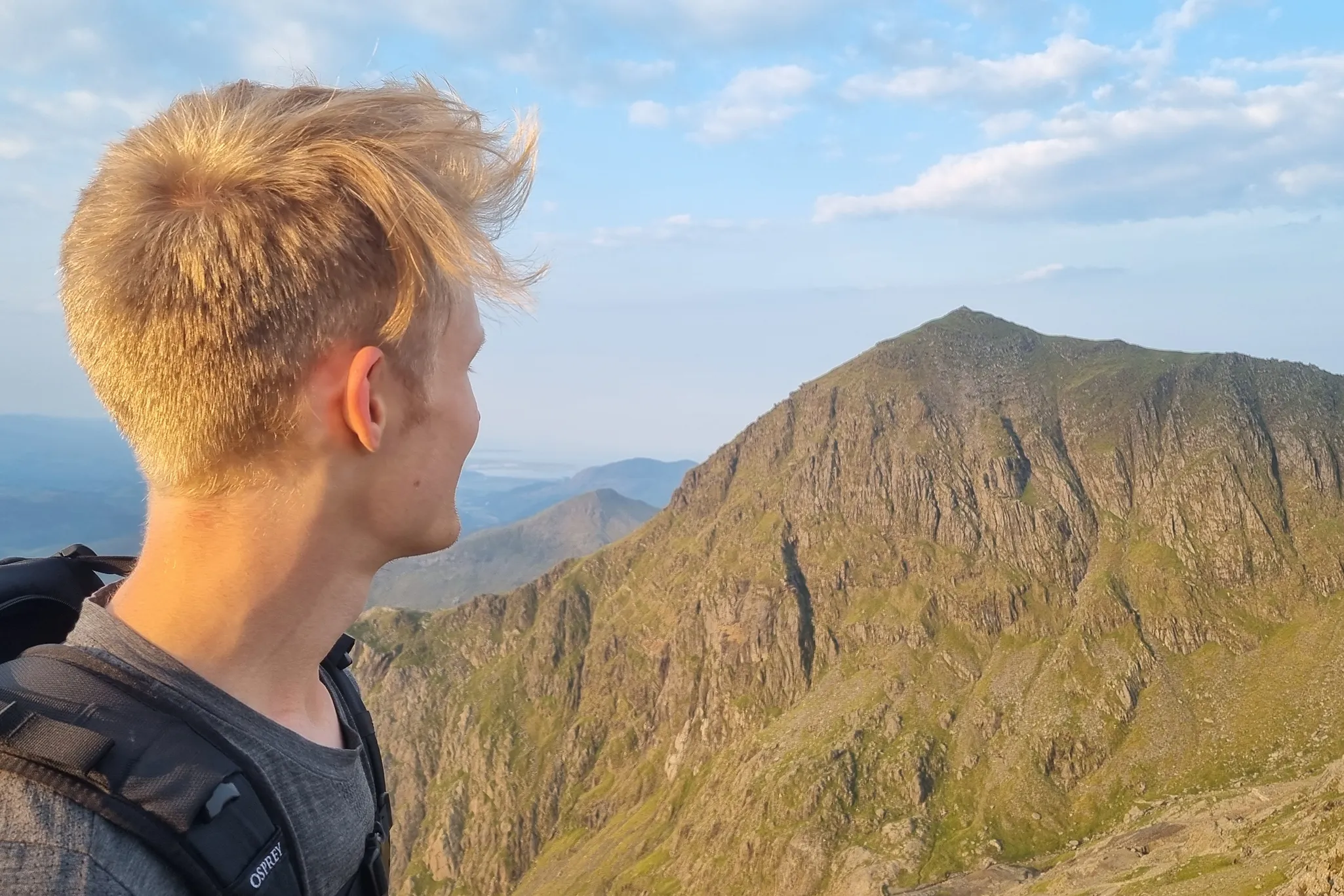
Interested in having a go at what is arguably the toughest one-day mountain challenge in the UK? Want to experience the best of Eryri (Snowdonia) over a longer, three-day adventure? You’ve come to the right place. Because the Welsh 3000s is the ideal way to fulfil either ambition.
In this beginner’s guide, we explore what the Welsh 3000s is, what it involves and what makes it special. We then turn our attention to preparing for this demanding route, what you need to carry with you and how RAW Adventures can help you make the most of your Welsh 3000s experience.
What is the Welsh 3000s?
The Welsh 3000s is the name given to a set of Welsh mountains, a legendary hiking route, and a big mountain challenge that is quickly earning itself a reputation as one of the UK’s most impressive hiking achievements. How can the Welsh 3000s be all three, I hear you ask? Let us explain.
The Welsh 3000s refers to all 15 peaks in Eryri National Park over 3,000 feet (914 metres). It’s also an established route that connects those 15 peaks. Finally, for the more competitive among you, the Welsh 3000s is a mountain challenge – one comparable to the National Three Peaks Challenge and similar tests of endurance. It requires participants to complete the Welsh 3000s route and scale all 15 of its peaks within 24 hours. We’ll go into this in greater depth a little later on. But, for now, just trust us that this is a remarkable achievement.
What about the route details?
The route covers around 30 miles (50 km) and includes approximately 4,200 metres of ascent. It is often separated into three distinct sections:
- The Yr Wyddfa (Snowdon) Massif – this section consists of Yr Wyddfa (Snowdon), Garnedd Ugain and Crib Goch. It includes a few tricky sections, most notably Crib Goch, so tackling them first means you get some of the harder parts of the Welsh 3000s done nice and early.
- The Glyders – includes Elidir Fawr, Y Garn, Glyder Fawr, Glyder Fach and Tryfan. While some participants argue the Yr Wyddfa massif is the most difficult section, we think the Glyders are regularly underestimated. The climb up to Elidir Fawr is especially tough, and Glyder Fawr’s scree slopes can be horrendous on the legs. If you’re into your scrambling, Tryfan is an absolute joy, though!
- The Carneddau – featuring Pen Yr Ole Wen, Carnedd Dafydd, Yr Elen, Carnedd Llewelyn, Foel Grach, Carnedd Gwenllian and Foel Fras, the Carneddau is considered the “easiest” section. But it contains enough steep slopes and testing inclines to still pose a challenge, especially if you’re struggling with weary legs.
While you can attempt the route going south to north (starting at the Yr Wyddfa massif and ending with the Carneddau) or north to south, we recommend the former, as it ensures you tackle the harder sections on fresher legs. If you’re having a crack at the “official” challenge, you’ll also need to go from south to north. That hasn’t stopped a lot of people from going north to south, though. Hats off to them – it’s probably a little more difficult that way around.
Why is the Welsh 3000s so special?
The Welsh 3000s is so special for so many reasons. If you’re attempting a 24-hour challenge, the sheer difficulty is part of the appeal. But if you’re a bit more relaxed about things, the breathtaking scenery is probably the biggest attraction.
- • The route – few hiking routes will cover as much ground and give you as comprehensive an overview of Eryri’s incredible natural wealth as the Welsh 3000s. It packs so much in and has been so thoughtfully put together, that it is difficult to beat.
- • The landscapes – we’re based in Eryri and absolutely love being so, so we may be biased, but is there a more beautiful area in the UK? The views, vistas and striking mountain landscapes are beyond phenomenal and the Welsh 3000s is the perfect way to experience them.
- • The wildlife – the same goes for the local wildlife. Welsh mountain goats and Carneddau ponies? Check. Soaring peregrine falcons? Check. Kingfishers, cuckoos and woodpeckers. All present and correct. Eryri really is a spectacular spot for wildlife lovers.
- • The challenge and the reward – If you’re looking for a physical challenge, the 24-hour attempt is about as tough as it gets in the UK. We’re pretty confident it’s more difficult than the Three Peaks. Plus, it doesn’t involve any driving. You’re on your feet for the whole thing! Finish it on time, and the sense of achievement is enormous.
Who can do the Welsh 3000s challenge?
One of the best things about the Welsh 3000s is its accessibility. It’s relatively easy to get to, making it a popular challenge for all kinds of hikers. That said, it requires a relatively high fitness level. This isn’t something you just turn up to and have a good go at. It requires forethought and preparation.
Additionally, the “official” Welsh 3000s route includes the iconic Crib Goch ridgeline scramble. This requires previous scrambling experience and a good head for heights. It features significant exposure, and it’s not unheard of for inexperienced hikers to freeze halfway through the traverse. As such, participants can’t just be physically fit, they need to be confident and capable in high mountain environments too.
We should also mention that Welsh 3000s participants will need to be mentally resilient. At some points on the route, your legs are really going to feel it, and a little self-motivation will be in order. Finding the mental and physical reserves required to keep on going isn’t always easy, but it’s essential if you are going to succeed.
How should I prepare for the Welsh 3000s?
If you want to tackle the Welsh 3000s and give yourself the best possible chance of succeeding, a carefully considered training plan is necessary. For this particular challenge, an effective preparation regime will include the following three components:
- Aerobic endurance exercise
This is lower-intensity training that improves your ability to sustain activity over extended periods. While you can improve your aerobic capacity in many ways (by jogging or cycling, for instance), training can be as simple as getting out on regular long walks in hilly terrain. Try to do these in similar conditions as those in which you’ll attempt the challenge (ie. carrying the same backpack load as on the day). - Strength training
As the name suggests, strength training improves muscular capabilities and strength. It’s great preparation for those leg-sappingly steep slopes and will give you the extra power you need to make it to the top of 15 3,000 ft summits. A weekly gym session focused on the legs and core will work wonders, but you can also do a lot of strength training at home. Squats are the secret to success in this case! - Mountain skills and experience
As well as physical preparation, Welsh 3000s participants must work on their mountain skills and build experience and confidence in rough terrain. Whether it’s practising your navigation skills or working on your scrambling technique, time spent developing these abilities will improve your chances of finishing the Welsh 3000s and ensure you enjoy the experience more.
Are there any other challenges I can do to prepare for the Welsh 3000s?
Absolutely. Taking on other walking challenges is an excellent way to prepare for the Welsh 3000s and will help you develop the physical fitness, technical skills and self-confidence you need.
Our sister company, Climb Snowdon, organises several mountain challenges that are ideal preparation for future Welsh 3000s participants. These include:
- • Snowdon Skyline – a 29-mile (48 km) hike that starts and finishes in the village of Llanberis and includes five famous Eryri peaks. Starting with Moel Eilio, you’ll also visit Foel Gron, Foel Groch and Moel Cynghorion, before finishing on Yr Wyddfa and heading back down to Llanberis.
- • Snowdon Sea to Summit – go from Caernarfon Castle at the mouth of the Seiont River to the summit of Snowdon on a 19-mile (30 km) route that takes in the Caernarfon lowlands, Snowdonia Slate Trail and Snowdon Massif.
- • Snowdon 6 – climb Yr Wyddfa not once, not twice, but thrice on a 24-mile (39 km) route that sees you cover every single main path on the mountain. That’s the Watkin Path, Miner’s Track, Pyg Track, Rhyd Ddu Path, Snowdon Ranger Path and Llanberis Path all in a day.
Further afield, there are the Edale Skyline, Lakeland 24 Peaks and Yorkshire Three Peaks challenges, too. We recommend checking out our guide to the best mountain challenges in 2025 for more information on these routes.
What equipment do you need for the Welsh 3000s?
Packing for the Welsh 3000s can be tricky. Because of the long day and the nature of the terrain you cover, there’s an urge to go light and pack as little as possible. However, you still need to prepare for any eventuality and carry enough water and nutrition to sustain your effort. The fact that weather conditions can change dramatically and very quickly also means you can’t afford to leave essential clothing behind.
With this in mind, we’ve compiled a comprehensive guide to kit considerations.
- Clothing
For the Welsh 3000s, you need lightweight, technical clothing that is comfortable over long distances and offers complete freedom of movement. Insulating layers are essential, as are waterproof protection for both the upper and lower body. Hats and gloves could also be a good idea, depending on the conditions. Well-worn and sturdy hiking footwear is incredibly important. Don’t try the Welsh 3000s in a brand-new pair of boots! - Backpack
Match your backpack to the duration of your trek. 20 litres is typically a good size if you’re doing the Welsh 3000s in 24 hours. 40+ litres is more appropriate for multi-day hikes. Padded straps, hip belts, rain covers and back mesh are all features that will enhance your comfort during the challenge. - Navigation
At the very least, all participants should carry a map and compass (and know how to use them). GPS devices are often valuable, too. Make sure you have a good understanding of the route before you set out and set targets to ensure your pacing is on point. - Hydration and nutrition
You should get a feel for how much you need to drink on long hikes during your training. You can then adapt your strategy accordingly for the Welsh 3000s. However, the general rule is that two or three litres is sufficient for a one-day hike. Due to the physical intensity of the route, you may want to increase this slightly. Pack energy-dense snacks, such as nuts, trail mix, energy bars and dried fruit, so you can consume them regularly throughout the day. A decent packed lunch is also a very good idea. - Safety
To ensure your safety while in the mountains, carry a first aid kit, survival bag and a decent head torch and spare batteries, as a third of the walking will be in the dark. Sunglasses and sun protection are also essential if tackling the challenge on a bright or warm day.
The Welsh 3000s with RAW Adventures
At RAW Adventures, our team has extensive experience guiding individuals and groups through the Welsh 3000s. Our bespoke Welsh 3000s adventures enable you to tackle this iconic challenge in a single day or take things a little easier and spread it over three. By signing up for a one or three-day guided Welsh 3000s event with RAW, you benefit from:
- • Unrivalled understanding of the local area
- • Expert insight into pacing and how to tackle tricky sections
- • A qualified Mountain Leader that takes care of navigation
- • Support vehicles in every valley so you can store bags with extra layers and food
On one-day itineraries, we provide hard-earned route expertise that maximises your chances of completing the Welsh 3000s within the allocated time. On three-day itineraries, we help you get the most from your experience by ensuring you’re comfortable, receive plenty of support and benefit from a local’s insights into the landscapes you’re moving through.
Learn more about the RAW Adventures Welsh 3000s adventures or contact our team to discuss any questions you have concerning our guided walks.
Instagram
#QuitTalkingStartDoing