Ultra-Trail Snowdonia – Complete Guide
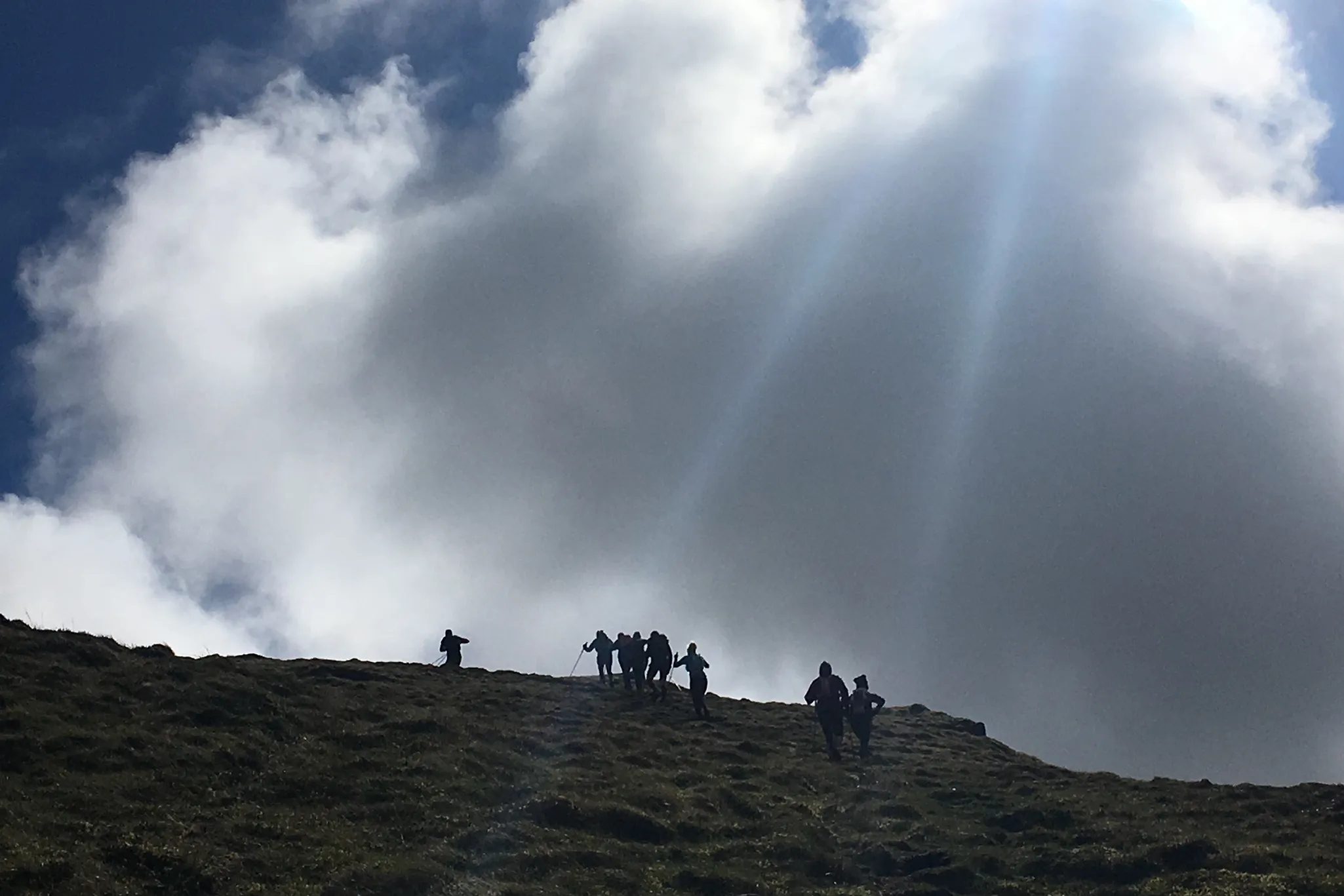
Despite its relatively short history, Ultra-Trail Snowdonia by UTMBⓇ (UTS) has quickly gained traction in the trail-running community and become one of the UK’s premier events. Designed to deliver an alpine-scale ultra experience, the race makes the most of Eryri’s (Snowdonia’s) breathtaking mountain landscapes and challenges participants with the kind of ascent statistics you typically see in continental events.
In this comprehensive guide to the UK’s only UTMBⓇ World Series event, we provide all the information you need to prepare for the event. Whether you have signed up for the 2024 event or you are eyeing the 2025 edition, this article contains plenty of valuable information.
Understanding UTS
UTS is a big deal. In 2023, more than 2,800 runners from 64 nations participated in the event. Crossing the rugged ridges and technical mountain trails of North Wales, athletes battled to overcome the competition, beat a personal target or simply finish before the cut-off. A race that attracts the world’s best trail runners, as well as passionate amateurs, this is an event like no other.
A celebration of Wales’ striking natural beauty, a remarkable physical achievement and an opportunity to put your mental strength to the test, UTS more than lives up to its reputation and requires significant preparation. The organisers certainly aren’t mistaken when they say UTS is beautiful beyond belief and savage beyond reason.
UTS history – a meteoric rise
The first UTS event was held in 2018 and consisted of a 100-mile and a 50-mile race. From race headquarters at The Heights Bunkhouse in Llanberis, the Race Director, Michael Jones, watched as the heavens opened, drenching the mountain trails and making a challenging route even more difficult. Of the 46 runners who entered the 100-mile race, just 13 finished. In one wet weekend, Ultra-Trail Snowdonia established itself as a near-legendary trail race and an event that commanded respect.
Since then, the race has gone from strength to strength, attracting larger and larger fields. In 2022, it became an official UTMBⓇ-affiliated race, further adding to the event’s prestige. Participants now compete for UTMBⓇ Running Stones and can use the event to meet the criteria required to apply for the series’ main event in Chamonix, France.
A tale of four routes
While the first UTS consisted of just two races, the modern incarnation features four distinct distances and routes – a 100-mile, 100 km, 50 km and 25 km race. In 2023, the 50 km race was the most popular event, followed by 100 km, 25 km and finally the 100-mile race. For each of the distances, the main details are as follows:
UTS 100 miles
- • 168 km with around 9,500 metres of elevation gain.
- • Starts on Friday afternoon – 48 hours to complete the distance.
- • Covers a large amount of Eryri National Park and involves technical trails, serious climbs and high levels of exposure on ridges.
- • Completing the event entitles participants to four running stones.
UTS 100 km
- • 103 km with around 6,400 metres of elevation gain.
- • Starts early on Saturday morning – 32 hours to complete the distance.
- • Covers many of the Park’s trickiest summits and technical ridgelines but fewer runnable trails when compared to the longer event.
- • Completing the event entitles participants to three running stones.
UTS 50 km
- • 55 km with around 3,300 metres of elevation gain.
- • Starts Saturday morning – 14 hours to complete the distance.
- • An entry point into the ultra-running world, it gives you a taster of alpine-scale events within a more manageable distance.
- • Completing the event entitles participants to two running stones.
UTS 25 km
- • 55 km with around 1,300 metres of elevation gain.
- • Starts later on Saturday morning – 5 hours 30 mins to complete the distance.
- • Involves a steep climb up Yr Wyddfa (Snowdon), a second smaller summit and then a descent into Llanberis. This event can get fast.
- • Completing the event entitles participants to one running stone.
How does the event typically play out?
Ensuring you understand the event schedule can help settle nerves and keep you calm. While the official schedule for 2024 is yet to be fully confirmed, it is likely to follow a similar running order to the 2023 event. As such, we can expect the weekend to look something like this:
Friday
Participants in the UTS 100 mile and 100 km events will sign on, go through the mandatory kit check and collect race bibs between 8 am and 12:45 pm. The event village will also open at 8 am and remain so until around 10 pm. The brave runners in the UTS 100-mile event will set off at 1 pm. From 2 pm, the UTS 50 km and UTS 25 km runners can sign on, go through the mandatory kit checks and collect race bibs.
Saturday
Participants in the UTS 100 km event will set off at approximately 5 am, followed by UTS 50 km runners at 8 am. Again, the event village will open between 8 am and 10 pm. There will be a short window for UTS 25 km runners to collect their bibs and sign on between 8 am and 9.45 am, before all participants start the event at 10 am. In the afternoon, the fastest finishers will start arriving, with the first 25 km runner expected to cross the line at noon, the fastest 50 km runner at 1.30 pm, the fastest 100-mile runner at 3 pm and the fastest 100 km finisher at 6 pm.
Sunday
While the shorter courses will close on Saturday, the longer courses remain open until Sunday. The event officially ends at 2 pm on Sunday.
What are the entry requirements?
The organisers emphasise the fact that real-world running experience is more important than race results. As such, they do not reject individual applications because of a previous lack of experience. However, they do make recommendations. For instance:
- • UTS recommends runners entering the 100-mile event have a valid UTMB Index at a distance of at least 100 km.
- • UTS recommends runners entering the 100 km event have a valid UTMB Index at a distance of at least 50 km.
They also encourage participants to take their preparation seriously and to ensure they are ready for the event. Cut-off times are strictly adhered to and lack of proper race prep significantly increases the likelihood of not finishing. From previous experience, the UTS team also know that unprepared participants are much more likely to need the assistance of the event’s Mountain Safety Team, stretching valuable resources.
Finally, the organisers are clear on the value of course-specific recce runs and on-site preparation. Knowing the terrain is critical when determining your pace and enables you to judge your efforts much more effectively. Nothing beats getting a firsthand feel for the course. Not only does it ensure you are well-prepared, but it also settles any nerves.
The essential kit you need to compete
The race organisers have mandatory kit requirements and participants must carry this equipment with them at all times. The equipment you use should be suited to the conditions and participants will ideally test their gear before racing. All runners go through a mandatory kit check when collecting their race bib and anyone who fails to meet the requirements will not receive their race bib. If at any point an official asks you to present a piece of mandatory kit and you cannot do so, you will be disqualified.
The kit list requirements differ depending on the distance you are running. For an idea of what the mandatory kit contains, we have reproduced the kit list for the 100-mile and 100-km events.
- • Suitable footwear
- • Waterproof jacket with hood
- • Warm second layer
- • Race leggings or trousers
- • Waterproof over-trousers
- • Warm, waterproof gloves
- • Warm beanie hat
- • A cap, bandana or buff
- • Running pack
- • A switched-on smartphone
- • Reusable cup, cutlery and plate or bowl
- • 1.5-litre minimum bottle or liquid container
- • Two head or hand torches
- • Survival bag or emergency bivvy bag
- • 800 kcal of emergency food reserves
- • Self-adhesive elasticated bandage
- • Whistle
- • Compass
- • Personal ID
There are also additional items for hot and cold weather kits. These will be made mandatory if the race director declares them necessary.
You can find the full mandatory and additional kit lists on the UTS equipment page.
How to prepare for UTS
To ensure you are adequately prepared for the big day, consider the following advice.
Get a feel for the landscape
UTS is very different from many of the other events in the UTMBⓇ Series. The trails are more rugged, there are fewer runnable sections and the route often takes you completely off-piste. It can come as a bit of a surprise to even the most experienced trail runners, so getting a good feel for racing in Eryri beforehand is essential.
Train on technical trails
It is one thing preparing for this kind of distance and elevation gain and smooth paths and easy terrain. It is another thing entirely when you regularly have to tackle technical sections or scrambling. Make sure your training includes all types of terrain.
Include strength and conditioning workouts
We know that this is an endurance event and most participants will focus on their aerobic capabilities. But we honestly believe that strength and conditioning workouts and exercises are key to success in UTS. Make sure your training schedule incorporates one or two such workouts a week.
Experiment with your nutrition
On longer distances like those in UTS, nutrition is everything. The unique nature of the event means that you may need to tweak or adapt your typical nutrition and hydration plans to account for the terrain. We recommend experimenting during training to find the perfect strategy for race day.
Work on your mountain skills
You are unlikely to get phone signal up in the more remote parts of Eryri, so you must ensure your general navigation skills are up to scratch, especially if you become disorientated in darkness or cloud. The UTS route is waymarked but there may be times you lose visual of these waymarks and/or they are disrupted for any reason. As well as having the route mapped via GPX file or similar, having some general awareness of where you are in the landscape will enable you to plan ahead and look after yourself. You will also need to practise other essential mountain skills in the lead-up to the event. Whether that is your scrambling technique, your ability to move quickly and safely despite exposure or your descending; getting the practice in early will pay dividends.
Perform a race recce
If we were to highlight one thing you can do to improve your chances of achieving your event goals, it would be to do at least one recce (preferably several) before the race. Of course, you can do this independently. But why not take advantage of local expertise and significant trail-running experience by joining one of RAW’s Official UTS Recce Days?
We are really pleased to be working alongside UTS to provide these official recce experiences for all the race distances and would love to see you there. The events will cover key sections on each of the routes, feature technical ascents and descents and focus on areas where you will likely be running the route in the dark. They are designed to build your confidence, improve your technical skills and provide you with guidance concerning race strategy. Above all, we have created experiences that help you enjoy your race day and give you the best possible chance of achieving your goals.
Top tips for race day
When it comes to race day, your training and preparation will come to the fore and we are sure you will nail your run. But it can’t hurt to keep these top race day tips in mind, either.
- Don’t let the excitement and relatively easy terrain at the start make you overcommit and go out too fast. Keep things sensible and stick to your planned pace.
- Weather conditions will play a role. As the race is in May, you could get hot weather, cold weather, rain, sun, and possibly even snow. There is a good chance you could experience several of these. Make sure you are prepared and have the experience and equipment to adapt to evolving race conditions.
- Technique is all-important. UTS is technical and requires you to move efficiently through the terrain if you want to keep the pace up. This can be difficult when you are close to the limit. However, staying switched on and thinking about when you need to use your running poles or stow them or how best to tackle a section will save you valuable energy and improve your time.
- Be prepared for tough times. Many runners from the UK are surprised by the sheer amount of vertical ascent in UTS. Fitting that much climbing into your training can be difficult if you don’t live in Eryri or the Scottish Highlands. During UTS, the ascent will take a physical toll. But it will also pose a psychological challenge too. Sustained ascent is mentally tough. You need to be prepared to battle through.
- Enjoy the experience. UTS is a truly special event that takes place amongst incredible natural beauty. Savour it!
Official UTS Race Recce Days with RAW Adventures
The RAW Adventures Official UTS Recce Days are led by our experienced Run Guides, all of whom have extensive knowledge of the local area and mountain running. They have all competed in UTS or worked with UTS runners on previous years’ recce events and understand the local terrain and conditions better than anyone. There is really no better way to get a handle on what to expect, hone your strategy and technique, and build your confidence. Learn more about RAW’s Official UTS Recce Days.
Explore More
Categories
More Guides & News
Are Winter Skills Courses Worth It?
This guide introduces the concept of a Winter Skills Course, and why and how this specific input could really help to increase knowledge and confidence for mountain walking in the winter months. Read on to find out what you can learn from attending, and how this experience can extend to year-round adventures.

Six Routes. One Unique Mountain Challenge
Designed and delivered exclusively by RAW Adventures, the Snowdon 6 Challenge invites you to explore six of the mountain’s most iconic routes – all in one incredible, fully-supported day. And now, thanks to our charity partner The Joshua Tree, you’ve got a rare opportunity to be part of something even more meaningful…

Marching Together Skyline Heroes Hike
TSSI Recruit, a global leader in telecoms, IT, and digital staffing, is stepping up with a team of recruits, ready to band together, push limits, and support veterans through HELP for HEROES. Their mission? To channel their core company values into every stride they take.
Instagram
#QuitTalkingStartDoing